Ministries

28 businesses found

The FindSaudi directory lists 28 businesses under Ministries in Saudi Arabia. Ministries is part of Associations, trade unions, chambers.

Holy Macca Municipality

The history of the establishment of the Holy City Secretariat to the year 1345 AH during the reign of King Abdul Aziz, may God rest his soul after the issuance of an order from God bless his soul annexation of municipal bodies in Mecca to manage one of the powers and responsibilities defined under the name (Sana'a) and called the president indefinitely (Secretary of capital ) and in 1397 added the word (holy) to Altzmatin. The vision, mission, values and strategic objectives Our vision: to be or villages Come finest and most beautiful Our mission: We are working to provide the municipality of upscale services, and contribute to the establishment of a sophisticated infrastructure, the residents of Umm al-Qura and Qasidiha, through the Investor optimal physical, human and technical resources : Core values Monitoring of God: Make the fear of God Almighty in secret and in public The speed of achievement: the completion of the service efficiently and effectively in less time, effort and cost Teamwork: a collective work transparently to reach the goal of clear Secretariat and Sincerity: honesty with oneself and others said, peace be upon him "you is a shepherd and each of you is responsible for his flock." Efficiency: the development of human resources through the provision of administrative behaviors based on Almmarafh, abilities, skills and experience Quality: excellent job well done sharing service collective creativity "that God loves when one of you to do it well." Justice and Equality: credibility and clarity in the application of systems, instructions and equality of all the Innovation: Encourage employees to create innovative creative ideas and turn them into the application and create the right climate for it : Strategic objectives Training and Development: 1. Tdrejb staff development programs 2. determine the distribution of powers and duties and responsibilities 3. Provide employee motivation programs 4. Increase awareness of the employees and their awareness of their responsibilities 5. Strengthen the spirit of belonging to the organization Clients: 1. Work on increasing customer satisfaction 2. improve transparency in dealings 3. Tseiel methods and means demand for services 4. Increase awareness of employees and the community for services provided by the Secretariat 5. guiding the organization to serve the customer 6. change the mental image of the clients of the Secretariat E-government: 1. Work to increase the proportion of services value (Q) for (r) year 2. Coordination with Saudi e-Government Program (pleased) 3. Access to handle internal mail by (Q) for (p. Operations: 1. improve the quality of services 2. Reduce the time required to provide services 3. Organized by directing operations 4. Encourage people to use e-government services 5. optimal investment of human resources 6. The development of relations with third parties 7. expansion in privatization programs Upgrading the city: 1. the development of a distinctive architectural identity in line with the religious status 2. Upgrading balanced urban development of the city. 3. activate and promote a culture of respect for the system Financial entities: 1. Enhance financial efficiencies and effectiveness. 2. Develop secure financial income of the Secretariat programs.

مكة المكرمة Details →

Amanat Hail

The official website of the Municipality of Hail, Saudi Arabia, providing municipal services and information for residents and visitors.

حائل Details →

Ministry of Housing

Ministry of Housing: The ministry aims to provide adequate housing in accordance with the appropriate options to the needs of citizens and in particular the following: Facilitate citizen access to a soft housing taking into account the quality within the limits of his income in a timely manner of his life. Increase the proportion of home ownership. Encourage the participation of the private sector in supporting the activities of the various housing programs. Raise the proportion of housing supply various kinds. Exercise all the tasks and functions related to housing. Assumed direct responsibility for all matters relating to the territory of housing in different regions of the Kingdom. Preparation of a comprehensive housing strategy for the Kingdom of modernization and development, and increase them for adoption in accordance with the statutory procedures. Propose rules and regulations, policies and regulations actively Housing and propose amendments own, and in conformity with the approved national strategies in this regard, and those policies and regulations all about: the mortgage, and the rights of tenants, landlords of residential units, housing the popular, public housing, and land development for the purpose of The establishment of a housing project. The development of various programs and sufficient to provide adequate housing for middle-income and below in accordance with the standards of objectivity and considerations in this regard specified by the Ministry. Encourage the private sector to participate in achieving the goals and strategies in the UK housing effectively. Determine the categories of eligible beneficiaries of the popular and charitable housing programs. Develop appropriate housing models for all categories of citizens, specifications and standards which take into account the quality and cost, in order to be guided by them, taking into account that the approved construction code, also sets guidelines and models for decades include the rights and obligations of all parties. Encourage the establishment of cooperative societies for housing and coordinate their efforts and review of systems projects. Building suitable housing for those in need who are unable to take advantage of lending, government and private funding programs. Encourage charities, individuals and companies to contribute to the construction of housing units suitable charity to the needy, and to provide advice and assistance when needed. Preparation of studies and research on housing. A base housing information. Representing the Kingdom in various forums in the field of housing.

الرياض Details →

Ministry of Economy and Planning

The Kingdom of Saudi Arabia has a planning tradition that spans over 30 years. The formal planning process, which started in 1970 (1390 Hijra), enabled the Saudi Government to make prudent decisions in the allocation and utilization of its resources for development. During the last four decades, the Kingdom underwent tremendous transformation under the ninth development plans, which saw the rapid growth of income and living standards of the people, accompanied by dramatic improvements in social and physical infrastructure. While we may not be providing direct services to the citizens, we ensure that all government agencies work in a coordinated manner to achieve the priorities of our policy makers. Towards this end, we do the following: • Preparation of the Kingdom's Development Plans. • Preparation of a periodic economic report about the Kingdom that includes an analysis of its economy and explains the extent of progress made in this domain as well as expected developments. • Estimation of the total amounts needed for implementation of the development plans approved by the Council of Ministers. These estimates shall be the basis for preparing the state's general budget. To this end, both the Ministry of Economy and Planning and the Ministry of Finance shall be in contract for consultation and exchange of information to attain full coordination between the general requirements of the development plans and the available resources. • Conducting necessary economic studies in the field of relevant topics, and submission of concluded recommendations. • Assistance of ministries and other government agencies in issues related with planning. • Providing technical advice as directed by the custodian of the two holy mosques.

الرياض Details →

Ministry Of Petroleum & Mineral Resources

The Ministry of Petroleum and Mineral Resources is one of the governmental bodies of Saudi Arabia and part of the cabinet. The ministry has the function of developing and implementing policies related to petroleum and petroleum products. The ministry is primarily responsible for the policies concerning oil, gas and natural minerals in the country which is the world's largest holder of crude oil reserves. It closely monitors the activities of the Saudi Aramco together with the Supreme Council for Petroleum and Minerals. However, the ministry has much more responsibility in this regard than the council. The other agency with which the ministry works is Petromin, the general petroleum and mineral organization. Through Saudi Arabian Basic Industries Company (SABIC), established in 1976, the ministry oversaw the operation of petrochemicals and other heavy industry projects.

الرياض Details →

Ministry of Trade of the Republic of Turkey

The Ministry of Trade of the Republic of Turkey is responsible for developing and implementing trade policies, regulating domestic and foreign trade, customs, and consumer protection. It supports exporters, manages trade agreements, and provides trade statistics and market information.

الرياض Details →

Ministry of Commerce of the People's Republic of China

The Ministry of Commerce of the People's Republic of China is the government agency responsible for formulating and implementing policies on domestic and foreign trade, international economic cooperation, foreign investment, and foreign aid. It oversees the development of the domestic market, promotes foreign trade and investment, and manages China's participation in multilateral and bilateral economic and trade agreements.

الرياض Details →

Ministry of Commerce and Industry

In Dhu al-Hijjah, 1344h (1926), King Abdulaziz, May Allah bless his soul and forgive him, issued what is known as the Sunni Will, wherein the ottoman law provisions, consistent with Allah's jurisprudence, are still in effect so far. After issuing this Will, a number of rules have gradually appeared, as there was not any governmental body interested in regulating commerce in the country. The mentioned instructions have provided that commerce comes under the internal issues in the Kingdom. And after three months of the issuance of the Will, his Highness King Abdulaziz issued an order to set up a commercial body to settle disputes among traders; it came out under the name" Council of the Traders". In 1347h, company registration system appeared, by its virtue a position was initiated associated with the prosecutor-general; its title is Company Registrar. Thus, the system has obliged registering all the commercial companies and associations at the company registrar. As such, the company registration system was first stepping stone in terms of regulating the commercial issues in the country. In 1349h, the customs system was issued, then in 1350h the Royal Decree No. 32; on 2/6.1931, was issued approving of the commercial system in the Kingdom, called the Commercial Court System. In 1358h, the Royal Order No. 8762, on 18/4/1939, was issued approving of Benchmark Registration system, and then the Royal Order No. 8117, on 27/6/1941, was issued approving of Goldsmith's system. Foundation of Ministry of Commerce and Industry::: As a result of the expansion of the commercial works and activities and their growth, the Royal Order No. 5703/5//22/10, on 17/3/ 1954, was issued establishing the Ministry of Commerce. It was tasked with regulating the internal and external commerce and developing it. Also, having been established, a number of bodies interested in commercial issues joined it. And the Benchmark Registration section was moved to it from the Ministry of Finance; in addition to supervising the commercial, industrial chambers in the Kingdom.

الرياض Details →

Ministry of Education

Ministry of Education: The first appearance of a system of education in the Kingdom of Saudi Arabia and the creation of knowledge through the Directorate in 1344 and served as its lay the foundation stone of the education system for boys. In 1346 his decision to form the first board of knowledge and purpose of the issued put an educational system that oversees education in the Hijaz region and with the Kingdom of Saudi Arabia Permissions Knowledge Directorate widened no longer function is limited to the supervision of the education in the Hijaz but included overseeing all education affairs in the whole kingdom, and it includes (323) School where she began four schools. In 1371 AH has been created and the Ministry of Education in the reign of King Saud bin Abdulaziz Al Saud, and was an extension and development of the Directorate of Education, has been assigned to the planning and supervision of public education for boys in three stages (primary - intermediate - secondary), and the King Fahd is the first minister of her and in 1380 was the establishment of the General Presidency for Girls' Education in the reign of King Faisal bin Abdul Aziz Al Saud (with a budget of 4.400.000) and after (15) elementary School and the Institute of parameters average one, headed by Sheikh Abdulaziz Nasser Al-Rashid, with the development of Education issued a Royal Decree annexation General Presidency for Girls' Education to the Ministry of Education in 1423 was appointed Dr. Khader al-Qurashi as Deputy Minister of Education for the education of girls, and a year later was transferred named the Ministry of Education to the Ministry of Education, and still to this day represented by the Minister of Education, His Royal Highness Prince Khalid bin Faisal bin Abdul Aziz Al Saud. And in recognition of the state under the leadership of the Custodian of the Two Holy Mosques King Abdullah bin Abdulaziz Al Saud, the importance of education in building the human civilizations and the industry has good share of education budget for the year 1432 amounted to -1 433 e is equivalent to 26 ‰ of the budget and estimated at (94,656,037) This non-limited support will contribute God willing, in achieving the objectives of the Ministry of Education and Education for the advancement of the instruction process to achieve the vision of the leadership of this country.

الرياض Details →

Ministry of Higher Education

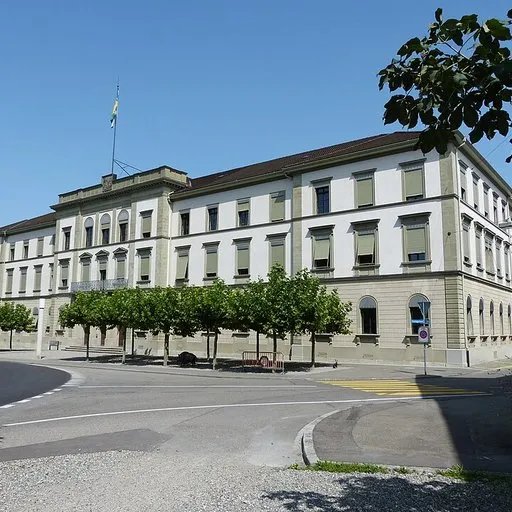
Ministry of Higher Education:: Higher Education in Saudi Arabia: Comprehensive development works are taking place across the Kingdom of Saudi Arabia in all fields, and higher education is no exception; it is a pillar of the successful development in any country. A royal decree numbered 1/236 in 8/5/1395 AH (1975 AD) stipulated establishing Ministry of Higher Education to foresee executing the national higher education policy. The Minister of higher education is responsible for the execution of the government policy for university education. University education received generous support that made available new universities, colleges of science and applied fields and huge budget allocations. The twenty one government universities of Saudi Arabia, six private universities and eighteen private colleges, all of them host a plethora of disciplines that are not merely-academic. Ministry of Higher Education is adopting contemporary trends in scientific research and strategic planning. Those working in higher education have deeply recognized the constant changes facing in the field, from privatization to financing, foreign competition and yet the fluctuating requirements of labor market. Thus they reverted to preparing for the change by future planning and well-thought handling of these parameters; resulting in expansions, self-evaluation, initiating programs and creating organizations that focus on local and global endeavors. Here we present an overview of the most prolific establishments National Center for Assessment in Higher Education (Qiyas) Qiyas center aims to provide for a number of assessment tests. General Aptitude Test, a.k.a. Qudrat test, for high school students and graduates is the most prominent and known among these tests. All national universities and higher education colleges, and also some military colleges and technical and vocational colleges, recognize and accept it as a complementary measure besides high school grade in both streams of science and arts. The test quantifies the aptitude that a student would pursue higher education career in specific colleges and majors. Qiyas assessments had gained acceptance amongst higher education institutions in the Arabian Gulf region and in some countries including United Kingdom and the United States. Ministry makes use of it as a good indicator for scholarship applicants at King Abdullah Foreign Scholarships Program. National Commission for Academic Accreditation & Assessment (NCAAA) The commission aims at assessing and accrediting all post-secondary education institutions and programs. Its' requirements include several criteria of institutions' in-house assessment, alignment with national framework for qualifications, and complying with quality measures in aspects of programs, student management, institution management and faculty management. In the last three years, many experts from Europe, America and Australia have aided the commission where it was exposed to countries national models for assessment, accreditation and quality assurance. This inceptional work commenced and was followed by preliminary assessment. The commission will be an information clearinghouse for quality in the higher education institutions whether governmental or private. Higher Education Statistics It is an established fact that informed decisions are based on correct and accurate data that portrays the reality and helps making model forecasts and clear vision. Hence the ministry established a unit dedicated to higher educations statistical information. This statistics unit aims at logging past data items and forecasting the future of all higher education variables. Such a job covers the parameters of admission and its types, majors and their dependencies, educational process evaluation, faculty specializations and professional development. Data monitored also includes enrolled students trends and their related phenomena of failure, drop-outs and graduate volume. The unit is planning to observe more of the particulars of labor market like its needs and the diffusion of higher education graduates in it. Geographic Information Systems Project An ongoing project to link geographic information of higher education institutions with the rest of spatial, demographic and urban properties of the country such as commercial, industrial and agricultural use patterns. Land and aerial transport network and distribution data is also added to construct a comprehensive information reserve at the disposal of decision makers. Saudi Centers Of Research Excellence SCORE Ministry is adopting a project to support research potentials in government universities, introducing a number of distinguished research centers in terms of management, funding and assessment. This made it possible for a university, especially the leading universities, to focus on one or more research fields and get financing by a ministry contract. University Academic Associations Development Project The ministry is working with universities on supporting academic associations by financing to establish headquarters for these associations. This enables them to provide independent activities and to sustain professional endeavors. Academic societies aim at gathering the specialized to discuss issues pertaining to their fields and to collaborate to in ways that serve their fields. It is worthy to note that Saudi universities are host to about 70 academic societies. National Center for E-Learning and Distance Learning Project The center work as a preparatory and support center to streamline and facilitate collaborative efforts of universities toward utilizing and leverage of current distance education and electronic learning applications. In the electronic learning program, authoring of a group of preparatory and shared courses is in progress. Such effort paves the way for higher education institutions to be empowered by recent technology to widen their audience. It also provides the basis for capacity development to administer advanced courseware that meets the requirements of assessment, accreditation and skill-building. Higher Education Research Center A dedicated research center focusing on higher education research, CHERS, was established on August 1999. CHERS first product was the setting of a framework for national higher education strategic plan. The center have conducted several studies for higher education projects including provincial university systems, pilot studies for establishing educational systems like community colleges, and issues of societal impact including university admission and capacities. Affairs of distance education and electronic learning also fit in the centers' scope of studies. In sum, CHERS is considered a think tank of ideas, visions and aspirations for the ministry. Stimulation of Private Education Contributions Stimulation of the contribution of private education can be summed in a number of procedures, including : Issuing a bylaw for private education that determines the licensing procedures, the sequence, and structure of these colleges Issuing bylaws that define human and material resources for the efficient work of colleges The government gives land for educational instructions incurring nominal fees , and provides soft loans of up to about 65 million Riyals per higher education college. As the representative of the government, Ministry of Higher Education grants to cover fees for about one third of students in each college or university if it reached the initial quality measures stipulated by the ministry. Scholarships for Abroad Study The government allocated for the scholarship program of the Custodian of the Two Holy Mosques more than 7 billion riyals to support applicants to prestigious universities in a number of countries such as USA, Britain, Germany, Canada, Italy, Spain, Holland, Australia, New Zealand, France, Japan, Malaysia, China, India, Singapore, and South Korea. More than eighteen thousand scholarship students over the past years (1425 AH /1426 AH / 1427 AH / 1428 AH ) and more than seven thousand five hundred students under completion of their course of studies. King Abdullah Scholarship Program aims to achieve a distinctive quality deliverables from the global output of higher education in disciplines needed in the country and qualifications including bachelor's, master's, doctorates and medical fellowships.
الرياض Details →

Ministry Of Culture & Information

The Ministry of Information was established in 1962. In 2003, responsibility for culture was added to the Ministry's portfolio. The new Ministry was given an agency for culture, and took responsibility for the activities of the following bodies, which had previously been affiliates of the General Presidency of Youth Welfare: - The King Fahd Cultural Centre - The Administration of Folklore - The Saudi Society for Culture and Arts - The General Administration of Cultural Activities - The Literary Clubs, and the General Administration for Literary Clubs.

الرياض Details →