Official Bodies

202 businesses found

The FindSaudi directory lists 202 businesses under Official Bodies in Saudi Arabia. It is divided into 5 subcategories, including Public Institutions, Ministries, Associations, Chambers of Industry & Commerce, Embassies.

Al-Namaa Charity Foundation

Al-Namaa Charity Foundation is a charitable initiative in Riyadh specializing in detecting and repairing water leaks. It provides electronic inspection of water networks without demolition, official reports to reduce water bills, and sustainable waterproofing solutions. The initiative aims to reduce water waste and protect building infrastructure.

الرياض Details →

U.S.-Saudi Business Council

The U.S.-Saudi Business Council is a bilateral, non-governmental organization established in 1993 by Saudi Royal Decree and the U.S. Executive Branch to advance private-sector business, investment, and partnership between the Kingdom of Saudi Arabia and the United States. It facilitates cross-border trade and investment, provides market intelligence, strategic introductions, and hands-on support to member companies.

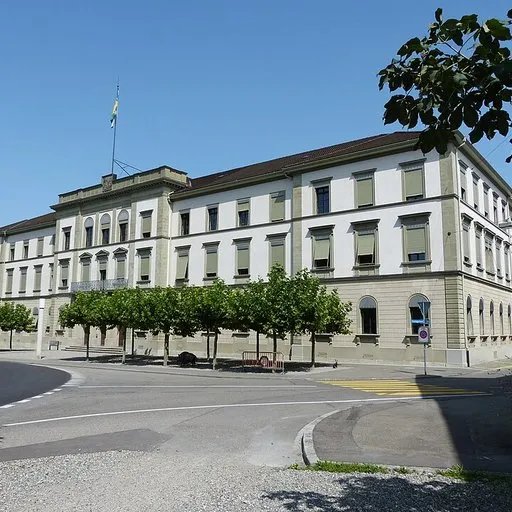
Majlis Ash-Shura

Shura (consultation) in Saudi Arabia has passed through several stages since the arrival of the late King Abdul-Aziz into Mecca in 1924. He called for the application of Shura at that early date. King Abdul-Aziz made Shura a foundation of his government in order to fulfill the divine order by applying Shariah (Islamic Jurisprudence) and Shura as parts of it. He intended to establish an Islamic Shura state applying Shariah as it is prescribed in the Qur'an and authentic Sunnah (deeds and teachings of Prophet Mohammad, peace be upon him). The National Council in 1924 The first elected council was founded in 1924 under the title of (The Consultative National Council) under the chairmanship of Sheik Abdul Gadir Al-Shebi. The council consisted of twelve members. At that time, when the state structure was not completed, the council was entrusted with drafting the basic laws for the administration of the country. At that early stage, there was no law to specify the functions of the council. However, that council continued for six months. The Consultative National Council in the year 1925 To expand the circle of participation, the previous council has been dissolved and a Sultanic decree has been issued to form a new elected council representing all 12 districts of Mecca. Two religious scholars and one member representing commerce were to be among the twelve elected members. The council included three additional members nominated by the Sultan from the distinguished citizens of Mecca. One can notice the combination of election and nomination in the formation of the membership of that council. The council was presided by Sheik Mohammed Al-Marzooqi, with Skeik Abdul Gadir Al-Shebi as vice president, and included fifteen members. Mohammed Suroor Al-Sabban was the secretary of the council. This council had more organization than its predecessor; it had a vice president and a secretary. The instructions to form the council came in six articles. These instructions specified the qualifications for membership, the closing date for voting, and eligible voters. The jurisdictions of the council were formulated in seven articles that included regulating all affairs in courts, municipalities, endowments, education, security, and commerce in addition to forming permanent committees to solve the problems related to the social traditions that did not contradict Shariah. The National Council in 1924 Among the stages that the country went through in the process of unification, and as part of the effort to build a state of establishments that can steer the society into more progress, King Abdul-Aziz issued his approval to enact a new Basic Law of Governance in 1926. Among the new laws was a special section for councils, including Majlis Ash-Shura for which items 28, 29, 30, 31, 36 and 37 were addressed. These items deal with the council location, council title (renamed Majlis Ash-Shura instead of its previous title, National Council), the formation of its membership (which included 12 members), determining the convening of its sessions and those who have the right to attend them, and limiting membership terms to one year. Such items were not included in the formation instructions of the previous National Council. Majlis Ash-Shura was launched on 6/7/1927. Majlis Ash-Shura in 1927 Two days after the dissolotion of the previous council, a royal decree was issued to amend the fourth section of the Basic Law of Governance which deals with Majlis Ash-Shura. The new amendment allowed the council to work according to a new revised system. The council for this year consisted of 8 members who serve two-year terms. According to the new law, the council is to consist of four members elected by the government after consultation with eminent experts, and four members appointed by the government two of whom had to be residents of Najd region. The new council law was issued in 15 articles reflecting the council's previous experience. This new law represents the first law drafted for Majlis Ash-Shura. The law stipulates that membership is to consist of eight full-time members presided by the deputy of the King, His Royal Highness Prince Faisal Bin Abdul-Aziz. The council had to convene twice a week, and it could convene more than that upon the request of its president when necessary. The year 1927 is considered the actual founding date of Majlis Ash-Shura during the reign of King Abdul Aziz who inaugurated the council's first session on Sunday 17/7/1927. Majlis Ash-Shura in 1928 Due to the large number of tasks entrusted to the council, the public interest necessitated some amendments on its law, so a new amended law was issued. The new law consisted of 14 articles. The amendments were the following: The number of the council members was increased to 12 instead of 8; the second article indicated that a permanent vice president for the council is to be appointed by the King while a second vice president is to be elected by the council; and the eighth article specified that the council sessions should be held every day instead of twice a week. In the same year, the council issued an appendix of seven articles for its law. The new appendix was intended to facilitate the council's works. This appendix was developed and issued as internal by-laws for Majlis Ash-Shura. It came in 24 articles. The council continued working under the above mentioned law without any amendments, and went on exercising wide jurisdictions until the founding of the Council of Ministers in 1953 when many of the jurisdictions of Majlis Ash-Shura were distributed between the Council of Ministers and other apparatuses of government which were developed according to their regulations. However, Majlis Ash-Shura continued to hold sessions and to look into issues referred to it albeit at a reduced level of power. From the reign of the late King Abdul-Aziz to the reign of the late King Khalid, the old council held a total of 6222 sessions and issued 9349 decisions in 51 council terms. The Modern Majlis Ash-Shura After the Kingdom achieved enormous progress in development, the Custodian of the Two Holy Mosques, the late King Fahd bin Abdul-Aziz, issued decrees to modernize all major laws in the country. In his historical speech, which he delivered in 27/8/1421 H, he introduced three major laws: the Basic Law of Governance, the Provincial Councils' Law, and the Majlis Ash-Shura Law. The modernization of Majlis Ash-Shura was considered to be and update to what had already existed by enhancing the council's frameworks, methods, and means and injecting efficiency, organization, and vitality into them. This was done to ensure that the council could cope with the rapid developments the country has seen in recent years in all fields, and to keep pace with the demands and requirements of modern times. This started a new page in the long history of Shura in the Kingdom of Saudi Arabia. The late King Fahd fortified the foundations of Shura in the kingdom by issuing the new Majlis Ash-Shura Law in 27/8/1421 H. (to replace the old law which was issued in 1347 H.) and by approving the bylaws of the council and their supplements in 3/3/1414 H. He launched the first term of the council with a speaker and 60 members. In the second term, the council consisted of a speaker and 90 members. In the third term, the council included a speaker and 120 members. In the fourth term, the council consisted of a speaker and 150 members, representing people of knowledge, experience, and competence. In 1/8/2005, the Custodian of the Two Holy Mosques King Abdullah bin Abdul-Aziz come into power. Since he was the Crown Prince, King Abdullah has been giving the council his utmost attention by supporting its march and strengthening its goals since. As a Crown Price, He delivered a number of royal speeches on behalf of the King to start the agenda of some years in the third and the fourth terms. He also showed his support of the council through amending some articles of the council's law to cope with the growing positive changes in the Kingdom in order to achieve welfare for the country and the citizens. The elite group of members from which this modern council is formed has proven its worthiness in the past four terms through great achievements and important decisions that have been made in a short period of time. In its new form, the council has held 1141 sessions and issued 1361 leading to the first year of its fifth term.


الرياض Details →

Council Of Cooperative Health Insurance

Qualifying department qualifies insurance companies to participate in the cooperative health insurance business, and qualifies third party administrative companies to handle cooperative health insurance claims. Moreover, oversee the performance of companies and supervise them to do their responsibilities stated by the Cooperative Health Insurance Law and its Implementing regulation and its standardize policy. Tasks and responsibilities :: First, overseeing the implementation of the system: Control over the comprehensive health insurance coverage. Rehabilitation of insurance companies to transact insurance business health. The adoption of health service providers. Osaddad Financial Regulation for the revenues and expenditures of the Council. To resolve differences for the settlement of claims payments between service providers and insurance companies. The development of standards of medical service necessary for the health insurance companies to respond quickly to service providers bear the costs of treatment. To grant exceptions to the health insurance companies to contract with non-Saudi physicians for the purpose of monitoring the compliance requirements of service providers within the treatment cost-effectiveness. Examine complaints that arise between the parties to the relationship of insurance and forwarded to the Commission violations of the system. Collect the value of financial sanctions for breaching the provisions of the health insurance system. Determine the technical provisions recognized in coordination with other regulators and insurance companies are obliged to them. Supervision of the Cooperative Health Insurance Fund based on converting part of the surplus of insurance, calculated in the light of the results of the insurance company. Review insurance premiums and permit approval for insurance companies on premium if different than the value of the premium made by the company in the Action Plan. Clarification and interpretation of the Regulations. Dissemination of public information about the activities of insurance companies are eligible. Publication of the tables and statistical data on health insurance in the UK each year. Second, supervision and control of insurance companies: Disqualification of the health insurance business in the following cases: ◦ disturb the qualification requirements of the insurance company. ◦ Do not use during rehabilitation (12) months. ◦ give the insurance company expressly for rehabilitation. ◦ the company had stopped the practice of the Company for (6) months. Protect the interests of the beneficiaries as it may deem necessary, such as the Secretariat to amend the plan of work of any health insurance company. To obtain from the other supervisory information, data, and that work on issues such as health insurance application forms used by the health insurance company in correspondence with the parties to the relationship of insurance. Review and audit of all health insurance companies under the jurisdiction of the Council and the demand from other regulatory bodies to do so. A reservation on any of the executives in any of the health insurance companies. Take action after reviewing the bringing of any malfunction of the other oversight responsibility for ensuring the solvency of the company and its capital adequacy and safety of its assets and its allocation and the technical ability to fulfill its commitment to the beneficiaries. To maintain the confidentiality of the information on the insurance companies are not used only for official purposes specified in the regulations. Third, supervision and control of service providers: Determine the fees for the adoption of health service providers. Determine the fees for exempt entities that have medical facilities of the insurance coverage or part of it. Proposal to pilot a service contract between service providers and insurance companies. Identify requirements that should be available at the health facility, to maintain quality of health services provided in cooperation with the government health institutions with the capacity. Control standards provide the requirements of quality and commitment of the service provider contract (by Secretariat), a special consultant with the Office to assess the extent of its commitment to quality requirements. Assessment of health and service contracts between insurance companies and providers of services and monitor the compliance of the contracts to maintain quality controls. Revoke the accreditation of service providers in the following cases: ◦ withdrawn the license of the facility by the Ministry of Health. ◦ lack of commitment to the service provider contracted by the Office of the Secretariat, with a specialist to assess and measure the extent of his commitment to the requirements of quality

الرياض Details →

Council of Saudi Chambers

The Council for Saudi Chambers of Commerce and Industry is the official federation for the 28 Saudi Chambers. The Council was formed as per the Royal Decree # R/6 dated 30/04/1400 Hijri (March 1980) with its head office in Riyadh. Its main objective is to observe the common interests of the Saudi Chambers, represent them on local and international levels and assist in the enhancement of the private sector's role in the development of the national economy. When the Council formed its executive arm, the General Secretariat of the Council, it started its actual tasks as of 1401 H (1981). Since then, the Council took good strides towards the realization of the objectives assigned to it. The key role of the Council is to serve the common interests of the Saudi Chambers, support the development of the private sector and enhance its role in the national development. The Council managed, through the support of the Chambers and relevant government authorities, to realize a large portion of its objectives in different fields. Administrative Organization of the Council: Board of Directors: The Board of Directors is composed of the heads of member Chambers and elected members from the board of directors of each Chamber. This makes the total number of members to 56 with a tenure of three years. In its first meeting the board elects its Chairman and two Deputies. The same Chairman shall not be elected for two successive terms. The Council's Executive Committee: It consists of the chairman, his two deputies and six members of the chambers' chairmen to be selected in the alphabetical order of the chambers. The Committee's membership duration period is only one year for the six members, but as for the chairman and his deputies, it lasts throughout the council's session of three years. This Committee looks into issues of utmost importance and urgency, and prepares for the Board of Directors' meetings. The main task of this Committee is to decide on the financial and administrative matters and to propose, prepare and study important issues before submitting them to the Council, in addition to following-up on the implementation of resolutions and recommendations issued in the Council's meetings. The General Secretariat: The General Secretariat of the Council is the executive arm that carries out the tasks and realizes the objectives of the Council. The General Secretariat is also the base of the institutional activities of the Council and is headed by the Secretary General. Vision And Objectives :: Vision: To have a notable role in the development of the national economy through the cooperation and coordination with the Chambers of Commerce and Industry, the business sector and all relevant entities in accordance with the general directions of the Kingdom of Saudi Arabia. Mission: The Council cooperates closely with the Saudi Chambers of Commerce and Industry and assists in the protection, preservation and development of the business sector in the Saudi Arabia. It acts as a leading partner in the nation’s development process, and helps preserve its human and financial resources as per the Islamic values. Strategic Objectives: 1. Support the national development programs. 2. Participate with the executive government authorities in preparing regulations and policies related to the business sector. 3. Enhance the business sector participation in the economic and social development. 4. Follow-up and monitor all internal and external economic changes. 5. Develop and promote exports specifically, in addition to external trade in general. 6. Participate in improving the investment climate. 7. Develop the small and medium size enterprise sector. 8. Participate in the Saudization of labor force in the business sector. 9. Develop the external economic relations and enhance commercial partnership with friendly countries. 10. Enhance the relations between the Council and the Chambers in addition to the relation between the Chambers themselves. 11. Represent the Saudi business sector in the international arena. 12.Activating the exercise of social responsibility of Saudi Chambers and all business sectors in the Kingdom. 13.Contribute to the development of existing industries in Saudi Arabia and to facilitate the setting up of industries which support it 14.Work to improve the image of entrepreneurs in society and the media constantly.

الرياض Details →

Council of Competition

Consistent with the economic policy which is based on the principles of competition which is adopted by the Kingdom of Saudi Arabia due to considerable developments are taking place in the economic arena. To strengthen the climate of competition in the business sector, a Royal Decree No. M/25 has been issued on 4/5/1425H approving the Competition Law. For implementing this Law a Royal Order No A/292, dated 6/9/1426H was issued regarding the formation of the Council of Competition Protection. The Council of Competition Protection is an independent council which is in charge of supervising the implementation of the Competition Law that aims specifically at protecting and encouraging fair competition and combat monopolistic practices that affect Lawful competition. In order to achieve these goals, the Council performs a number of functions and duties such as approving the merger and acquisition of firms that resulting in a dominant position in the market, Ordering investigation, collecting evidences pertaining to complaints practices in violation of provisions of the Competition Law, and ordering prosecution. The Council of Competition Protection will maintain the competitive environment for the business sector with justice and transparency in the local markets, which would enable businesses to compete freely as well as enable the consumers to benefit from the fair competition. As per the wish to increase awareness of the importance of competition and spreading the competition culture, the Council will communicate with the Business Sector practicing in the Saudi Market. The Council will explain the rights and commitments of the Business Sector in accordance with the Competition Law by means of preparing and holding introductory workshops and seminars.

الرياض Details →

Smart Solutions Group

Smart Solutions Group was established in Jeddah in 2000. It provides government services and commercial brokerage with a high professional level, meeting all client needs and relying on modern technology for easy communication, research and in-depth studies. Its team includes administrators, lawyers and consultants with extensive experience across disciplines and knowledge of the laws and regulations of the Kingdom of Saudi Arabia. Its services include real estate development, general contracting, administrative services and consulting, and importing from China.

General Directorate Of Public Security

Objectives of Public Security :: Preventing all sorts of crimes before they occur. Protecting lives and properties. Arresting crime perpetrators. Securing administrative and technical development. Using modern technologies to develop and improve administrative operations. Objectives of IT work at Public Security: Supporting Public Security's key objectives. Saving time and efforts. Applying principle of combating crime before its occurrence. Relying on Public Security employees to operate and maintain different systems. Educating Public Security employees on technical security projects. Applying e-government concepts designed in technical projects. Developing a strategy to control automated, field, and administrative workflow, to guarantee a concept of leadership and control.

الرياض Details →

Knowledge Economic City

Knowledge Economic City (KEC) is aimed to serve Saudi Arabia’s economic diversification strategy and reviving Madinah’s role as a center for the Islamic knowledge and a global knowledge and culture center. Moreover, to elevate the quality of life and economic prosperity of Madina’s unique assets to create more jobs, improved visiting experiences, more businesses, and lifestyle opportunities. The “Opportunities Gateway” to Madinah KEC is a 4.8 million sqm zone located only 5 km from the holy mosque on the main axis connecting the airport, train station with the holy mosque providing numerous investment and development opportunities across all the sectors through commercial, residential, educational, and hospitality projects that will enable KEC to be a knowledge industries hub and enabler . Accessibility and Uniqueness of Location KEC enjoys a unique location on the eastern side of Madinah, and is within the holy zone. The site is split in the middle by King Abdulaziz road, a main 100m wide axis that links it directly to the underground parking and bus loading facilities of the holy mosque. KEC is also well connected to all the major highway and arterial road networks in Madinah such as the 2nd and 3rd ring-roads, the new airport road and Al-Jameaat road. The site is only 5km away from the holy mosque, 8km from the International Airport, while the Haramain high-speed railway station is conveniently located on the eastern side of KEC. In addition, the government is planning for a public transport solution that will connect the train station, KEC and the holy mosque- to become the most efficient access for visitors and residents alike.

المدينة المنورة Details →

King Abdulaziz City for Science and Technology (KACST)

King Abdulaziz City for Science and Technology (KACST) is an independent scientific organization administratively reporting to the Prime Minister. KACST is both the Saudi Arabian national science agency and its national laboratories. The science agency function involves science and technology policy making, data collection, funding of external research, and services such as the patent office. KACST has currently over 2500 employees. Based on is charter 31.I.2.1.985, KACST's main responsibilities can be summarized as follows: Main Responsibilities: 1. Propose a national policy for the development of science and technology and develop strategies and plans necessary to implement them. 2. Coordinate with government agencies, scientific institutions and research centers in the Kingdom to enhance research and exchange information and expertise. 3. Conduct applied research and provide advice to the government on science and technology matters. 4. Support scientific research and technology development. 5. Foster national innovation and technology transfer between research institutes and the industry. 6. Foster international cooperation in science and technology. Strategic Objectives • A sustained planning mechanism for all scientific disciplines. • Scientifically knowledgeable and capable government agencies. • A developed R&D infrastructure with fully functioning centers of excellence in all scientific disciplines. • Strong interaction between the private sector and research centers. • Regional leaders in patent ownership and issuance. Advanced incubator systems and output. • World leaders in strategic technologies including water and oil and gas. • Enhanced interaction networks between all scientific agencies. Vision: To be a world-class science and technology organization that fosters innovation and promotes knowledge-based society in the Kingdom. KACST Mission: To develop and invest in the national science, technology, and innovation eco-system to promote knowledge-based society that serves the Kingdom’s sustainable development, through: • Formulating national policies and plans for science, technology, and innovation • Coordinating science, technology, and innovation activities nationally • Conducting applied research and technology development • Providing support to scientific research and technology development in the kingdom • Investing in technology development and commercialization • Establishing and fostering local, regional, and international cooperation and partnerships for technology transfer, localization, and development • Promoting, fostering, and investing in intellectual property • Providing consultation and innovative solutions Values: • Integrity • Loyalty • Value and respect employees • Serve society • Excellence • Team work • Transparency.

الرياض Details →